
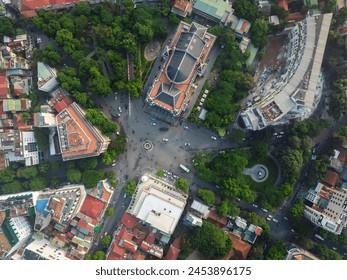
Article brief
Nestled in the heart of Vietnam's capital, the Hanoi Old Quarter stands as a living museum of architectural heritage that spans centuries.
Route flow, hotel placement and transfer timing are the three decisions that shape the whole trip.
Nestled in the heart of Vietnam’s capital, the Hanoi Old Quarter stands as a living museum of architectural heritage that spans centuries. This historic district, with its narrow streets and bustling markets, offers visitors a fascinating glimpse into the evolution of Vietnamese urban design. The architectural landscape of the Old Quarter represents a captivating blend of traditional Vietnamese styles and French colonial influences, creating a unique aesthetic that tells the story of Hanoi’s complex history.
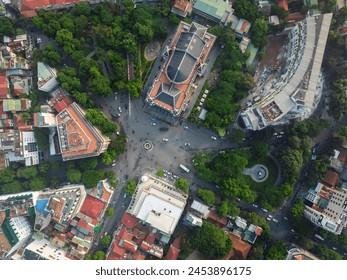
As you wander through the labyrinthine streets, you’ll discover centuries-old temples alongside elegant French villas, and traditional tube houses adjacent to Art Deco facades. This architectural diversity makes the Old Quarter not just a tourist destination, but a living testament to Vietnam’s cultural resilience and adaptive creativity in the face of historical changes.
In this article, we’ll explore the distinctive architectural elements that make the Hanoi Old Quarter a must-visit destination for architecture enthusiasts and cultural travelers alike. Whether you’re planning your first visit or seeking a deeper understanding of this remarkable district, join us as we uncover the stories behind these historic structures.
The Historical Evolution of Hanoi Old Quarter Architecture
The architectural story of the Hanoi Old Quarter begins over a millennium ago when King Ly Thai To moved the capital to Hanoi (then called Thang Long) in 1010. However, much of what we see today reflects developments from the 15th century onwards, when the area became organized around specialized craft guilds.
“The Ancient Quarter, as it is called in Vietnamese (Phố cổ Hà Nội), formed the commercial center of old Hanoi in the 19th century and the early 20th century Vietnamese. The district originally developed where skillful craftsmen concentrated to produce and sell their goods.”
The historical timeline of architectural influences can be divided into several key periods:
- Traditional Vietnamese Period (15th-19th century): Development of tube houses, communal houses, and traditional Vietnamese layouts
- French Colonial Period (1887-1954): Introduction of European architectural styles and urban planning concepts
- Post-Independence Period (1954 onwards): Adaptation and preservation amid modernization pressures
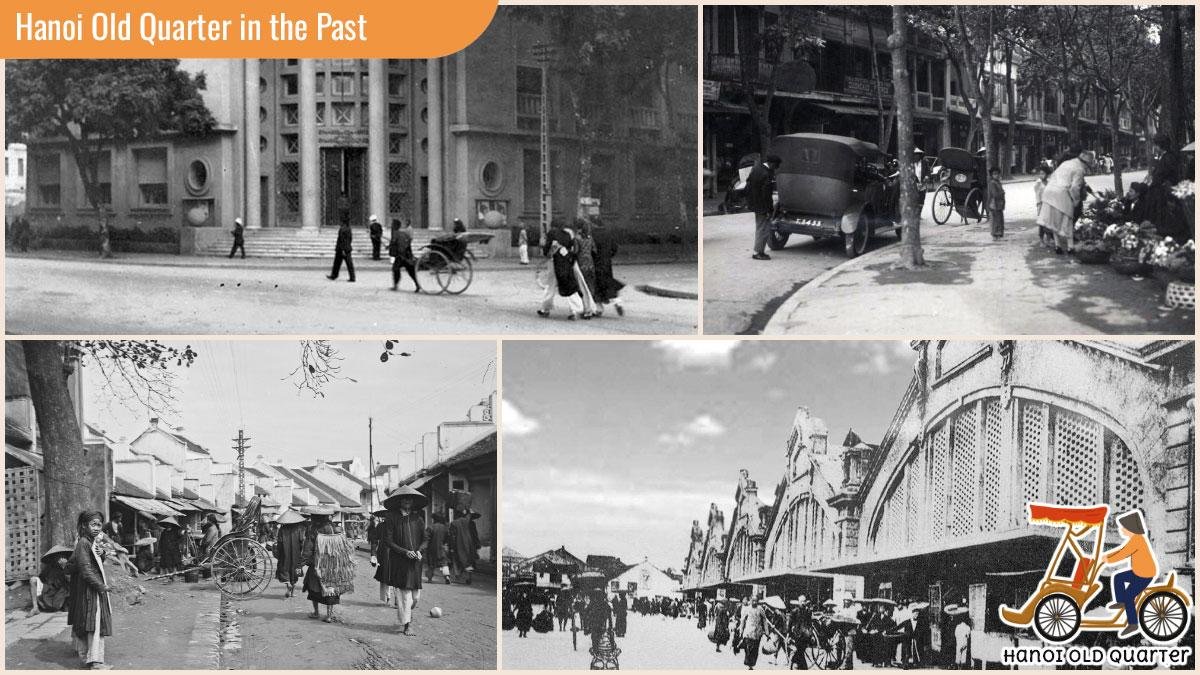
Each of these periods has left distinct architectural fingerprints on the Old Quarter, creating the layered, textured cityscape we see today. Understanding this historical context enhances appreciation of the architectural details you’ll encounter while exploring the district.
Traditional Vietnamese Architectural Elements in the Old Quarter
The foundation of the Old Quarter’s architectural identity lies in its traditional Vietnamese elements. These design features reflect both functional adaptations to the local climate and deeply-rooted cultural values.
The Iconic Tube Houses
Perhaps the most distinctive traditional architectural feature in the Old Quarter is the tube house (nhà ống). These narrow, multi-story dwellings emerged as a response to taxation policies that charged property owners based on the width of their street frontage.
Characteristics of authentic tube houses include:
- Extremely narrow facades (as little as 2 meters wide)
- Extraordinary depth (sometimes extending 50-60 meters back from the street)
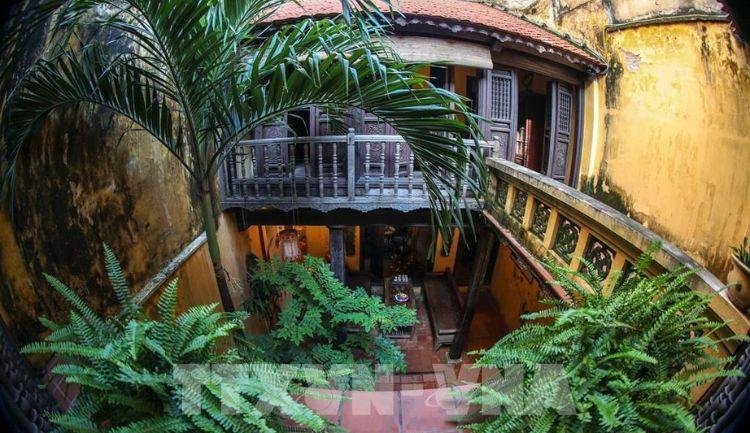
- Multiple courtyards to provide natural light and ventilation
- Tiled roofs with graceful curves
- Carved wooden details and screens
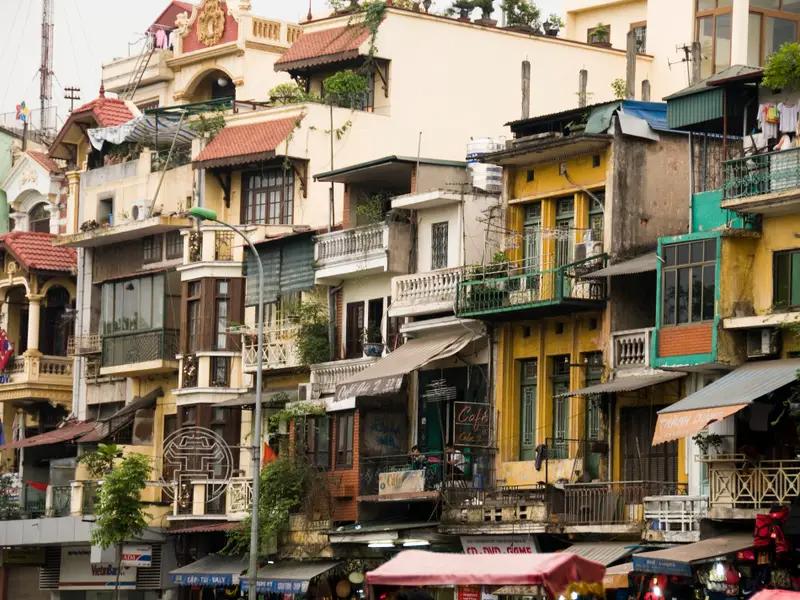
One of the best-preserved examples is the Heritage House at 87 Ma May Street, which has been restored to show the traditional layout and features of these unique structures. A visit to this heritage site offers valuable insight into traditional Vietnamese urban living. Consider adding it to your Old Quarter walking tour itinerary.
Religious Structures and Community Spaces
The Old Quarter is home to several significant religious buildings that showcase traditional Vietnamese architectural principles:
- Bach Ma Temple (White Horse Temple): The oldest temple in the Old Quarter, featuring traditional Vietnamese design elements including elaborate woodcarvings, ceramic decorations, and symbolic motifs
- Đình (Communal houses): Serving as community gathering spaces, these structures reflect the important role of community in Vietnamese culture
- Ancient gateways: Ornate entrances that mark transitions between spaces, often featuring symbolic decorative elements
These traditional structures typically incorporate feng shui principles and symbolic decorative elements that reflect Vietnamese spiritual beliefs and cultural values. The use of natural materials like wood, ceramic tiles, and stone demonstrates the traditional Vietnamese approach to working harmoniously with the environment.
French Colonial Architectural Influences
When France established its colonial presence in Vietnam in the late 19th century, Hanoi became the administrative center of French Indochina. This period introduced dramatic changes to the city’s architecture and urban landscape, particularly visible in and around the Old Quarter.
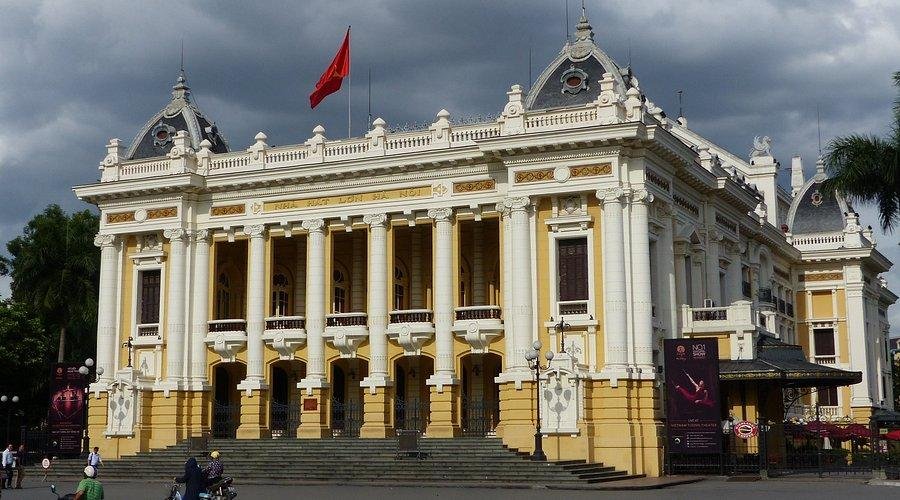
The French colonial architecture in Hanoi is characterized by:
- Neoclassical design elements: columns, balustrades, and symmetrical facades
- Art Deco influences in later buildings
- Yellow ochre as a predominant color
- Adaptation to tropical climate through high ceilings, large windows, and verandas
- Decorative wrought iron balconies and railings
- Integration of shutters and louvers for ventilation
While the most prominent French colonial buildings are found in the adjacent French Quarter, their influence permeated the Old Quarter through hybrid designs. Many traditional buildings were modified or rebuilt with French elements, creating a distinctive architectural fusion.
“The French colonial architecture in Hanoi represents a unique adaptation of European styles to Southeast Asian conditions, resulting in buildings that combine Western grandeur with practical solutions for the tropical climate.”
Notable examples of French colonial influence in and around the Old Quarter include:
- St. Joseph’s Cathedral (built 1886-1896), modeled after Notre Dame in Paris
- Hanoi Opera House (completed 1911), inspired by the Palais Garnier
- Modified shophouses with European facades but traditional Vietnamese layouts
For architecture enthusiasts, comparing the French Quarter and Old Quarter architectural styles offers fascinating insights into how colonial influence was adapted to existing Vietnamese urban contexts.
The Unique Tube House Architecture
The tube houses of Hanoi’s Old Quarter deserve special attention as they represent a distinctive architectural response to both economic pressures and cultural preferences. These narrow buildings, sometimes only 2-3 meters wide but extending 50-60 meters deep, create the characteristic dense urban fabric of the district.
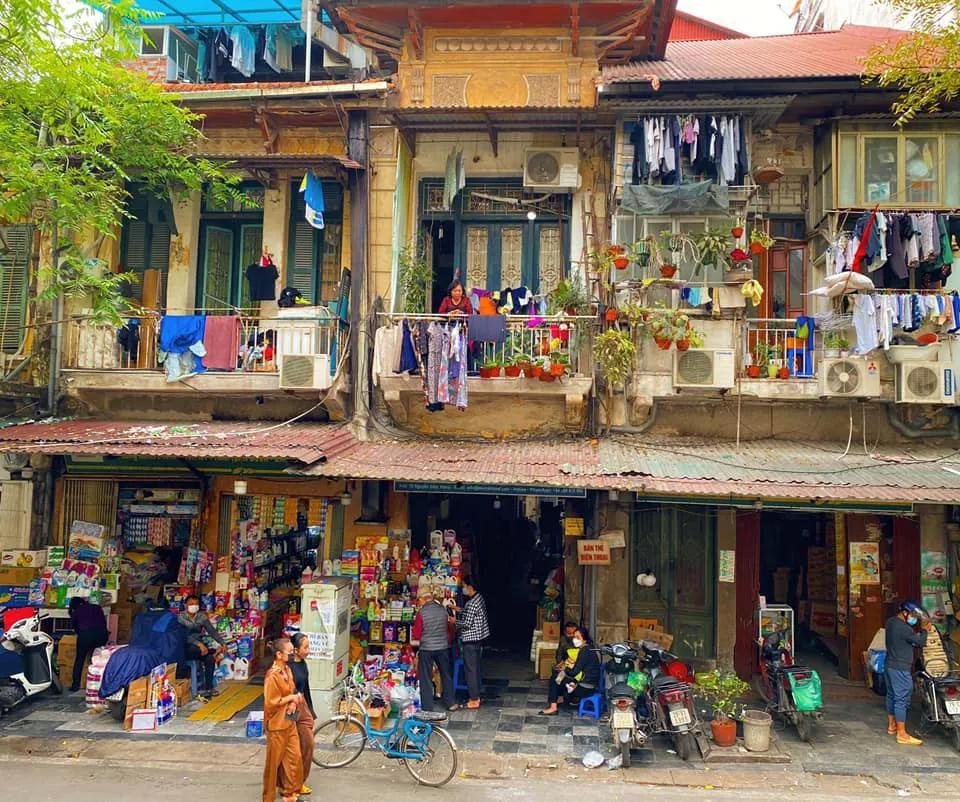
Key Features of Authentic Tube Houses
Traditional tube houses incorporate several innovative design elements:
- Sequential rooms: Spaces arranged in a linear sequence from front to back
- Interior courtyards: Open-air sections that allow light and air to reach the middle and rear of these deep structures
- Flexible spaces: Areas that could serve multiple functions, from commercial to residential use
- Wooden partitions: Movable dividers that allowed reconfiguration of internal spaces
- Symbolic thresholds: Decorative elements marking transitions between public and private areas
These ingenious solutions allowed families to maximize limited urban space while maintaining essential Vietnamese cultural values around family life, commerce, and privacy. Today, many tube houses serve dual purposes as shops on the ground floor with living quarters above, continuing their historical mixed-use function.
For those interested in exploring these unique structures, guided architectural tours of the Old Quarter often provide access to selected tube houses that aren’t typically open to the general public.
Key Architectural Landmarks in the Old Quarter
The Old Quarter contains numerous architectural treasures that showcase both Vietnamese and French colonial styles. Here are some of the most significant buildings that architecture enthusiasts should not miss:
Bach Ma Temple
As the oldest temple in the Old Quarter, Bach Ma Temple exemplifies traditional Vietnamese religious architecture. Dating back to the 9th century (though rebuilt several times), its design features include:
- A traditional three-section layout
- Ornate wooden beams and columns
- Ceramic decorative elements
- Curved roof with elaborate ridge details
Located at 76 Hang Buom Street, this temple is not only architecturally significant but also holds important cultural and historical value in local traditions.
Ancient House at 87 Ma May Street
This carefully restored traditional tube house provides visitors with a rare opportunity to see the authentic layout and features of these unique buildings. Built in the late 19th century, it showcases:
- The narrow facade typical of tube houses
- Multiple courtyards for light and ventilation
- Traditional wooden furnishings and decorative elements
- The original spatial organization of a merchant family home
St. Joseph’s Cathedral
Though technically just outside the Old Quarter boundaries, St. Joseph’s Cathedral is an imposing example of French colonial religious architecture that dramatically contrasts with the surrounding Vietnamese buildings. Completed in 1886, its Neo-Gothic design features:
- Twin bell towers reminiscent of Notre Dame in Paris
- Stained glass windows from France
- Gothic arches and buttresses
- A dramatic facade that creates a focal point visible from many Old Quarter streets
The juxtaposition of this European-style cathedral against the backdrop of traditional Vietnamese architecture perfectly illustrates the cultural blending that characterizes the Old Quarter.
For visitors interested in exploring these landmarks, consider joining one of our guided tours of Hanoi that include detailed architectural commentary.
Architectural Fusion: Where East Meets West
What makes the architecture of Hanoi’s Old Quarter truly distinctive is not just the presence of both Vietnamese and French styles, but the creative ways these traditions have merged to create hybrid forms. This architectural fusion reflects the broader cultural adaptations that occurred during the colonial period and beyond.
Hybrid Architectural Elements
Look for these fascinating combinations of Eastern and Western architectural traditions:
- French-influenced tube houses: Traditional tube house structures with European decorative elements on their facades
- Modified shophouses: Vietnamese commercial buildings adapted with French balconies, shutters, and decorative moldings
- Adaptive reuse: Colonial-era buildings repurposed in ways that reflect Vietnamese spatial preferences and uses
- Decorative fusion: Ornamental elements that combine European motifs with traditional Vietnamese symbols
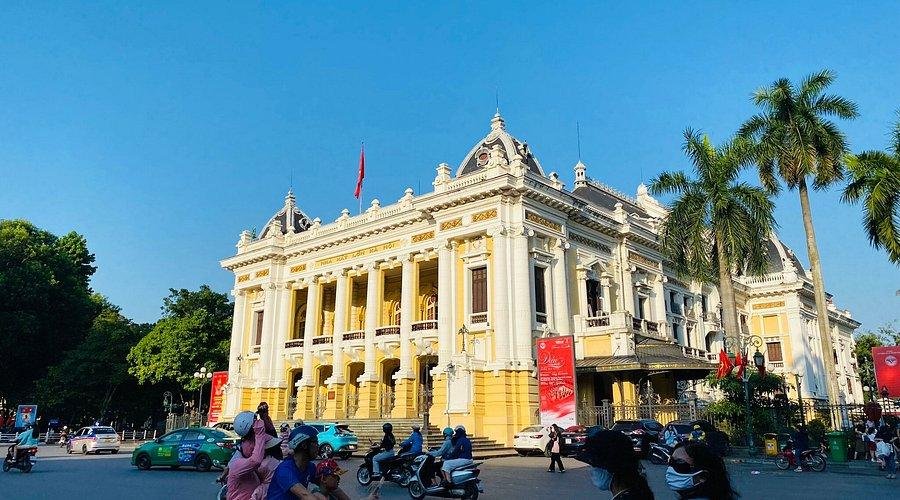
This architectural blending is most visible in buildings constructed during the later colonial period (early 20th century) and in modifications made to older structures. Walking along streets like Hang Dao, Hang Gai, and Hang Trong reveals numerous examples of this distinctive fusion style.
“The hybrid architecture of Hanoi’s Old Quarter is neither fully Vietnamese nor purely French, but rather a third aesthetic that emerged from the creative tension between these traditions—a visual representation of cultural adaptation and resilience.”
These architectural hybrids are not merely of historical interest—they represent a uniquely Vietnamese approach to cultural change that prioritizes adaptation over replacement, creating continuous connections between past and present.
Conservation Challenges and Efforts
While the architectural heritage of the Old Quarter is one of Hanoi’s greatest cultural treasures, it faces significant challenges in the 21st century. Rapid urban development, population pressures, and economic factors all threaten the authentic character of this historic district.
Current Challenges
The preservation of the Old Quarter’s architectural heritage confronts several major obstacles:
- Deterioration of aging structures due to climate conditions and inadequate maintenance
- Development pressure and rising land values
- Overcrowding and infrastructure strain
- Modifications that compromise architectural integrity
- Balancing preservation with residents’ needs for modern amenities
According to a UNESCO report, many historic structures in the Old Quarter require urgent conservation attention to prevent irreversible damage.
Conservation Initiatives
Despite these challenges, numerous efforts are underway to preserve the Old Quarter’s architectural heritage:
- The Hanoi Old Quarter Management Board oversees preservation policies and implementation
- Restoration projects for selected heritage buildings, such as the Ancient House at 87 Ma May Street
- Documentation initiatives to record traditional architectural features and techniques
- International partnerships with preservation organizations
- Educational programs to increase awareness about architectural heritage
Visitors can support these conservation efforts by patronizing businesses housed in well-maintained historic buildings and by participating in responsible tourism activities that contribute to heritage appreciation.
Experiencing the Architecture of Hanoi’s Old Quarter
To fully appreciate the architectural richness of the Old Quarter, consider these approaches to exploration:
Self-Guided Architectural Tours
For independent travelers, several routes can be particularly rewarding:
- The “36 Streets” Route: Follow the traditional guild streets, each named for the goods once sold there, to observe the relationship between architecture and commerce
- Tube House Exploration: Focus on streets like Ma May, Hang Gai, and Hang Trong to compare different examples of tube house architecture
- French Influence Walk: Start at St. Joseph’s Cathedral and trace the spread of colonial architectural elements into the Old Quarter
Our Hanoi Old Quarter Map can help you plan these routes efficiently.
Guided Architectural Tours
For deeper insights, consider joining a specialized tour:
- Walking Tours of the Old Quarter with architectural historians
- Cycling Tours that cover both the Old Quarter and French Quarter
- Photography tours focused on architectural details
These guided experiences provide contextual information and access to buildings that might not be open to the general public.
Photography Tips for Architecture Enthusiasts
To capture the architectural essence of the Old Quarter:
- Visit in early morning or late afternoon for the best light on building facades
- Look up to notice second-story details often missed by casual observers
- Seek out interior courtyards where traditional features are often best preserved
- Photograph contrasting architectural styles that appear side by side
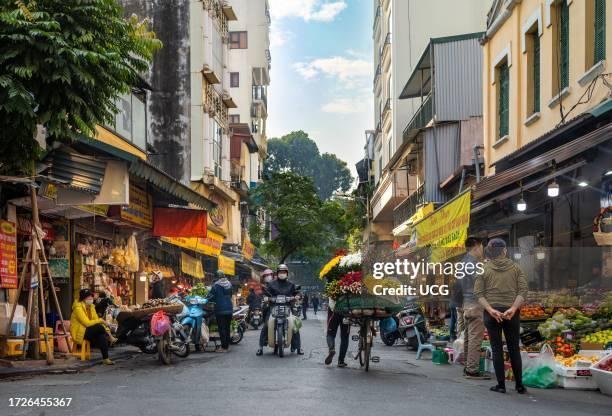
- Capture the relationship between buildings and street life to show architecture in its living context
If photography is your passion, consider our specialized photography tours led by guides who know the best architectural viewpoints.
Frequently Asked Questions About Hanoi Old Quarter Architecture
What is the oldest building in Hanoi’s Old Quarter?
The oldest structure is Bach Ma Temple, which dates back to the 9th century in its original form, though it has been rebuilt several times. It remains an excellent example of traditional Vietnamese religious architecture.
Why are the buildings in the Old Quarter so narrow?
The narrow facades (sometimes just 2 meters wide) resulted from a taxation system based on street frontage width. Property owners built extremely narrow but deep houses (tube houses) to minimize their tax burden while maximizing living space.
How did French colonial architecture influence the Old Quarter?
French influence appears in decorative elements added to Vietnamese buildings, construction techniques, the introduction of balconies and shutters, and the development of hybrid architectural styles that blend Vietnamese and European features.
Are people still living in the historic buildings of the Old Quarter?
Yes, many historic buildings remain residential, though often with commercial space on the ground floor. This mixed-use pattern continues the traditional approach to urban living in the district.
What is the best time of day to photograph architecture in the Old Quarter?
Early morning (6-8 AM) offers the best light and least crowded streets for architectural photography. Late afternoon (4-5 PM) also provides warm light that highlights building details.
Experience Hanoi Old Quarter Architecture with Vietnam Travelers
The architectural heritage of Hanoi’s Old Quarter offers a fascinating window into Vietnam’s complex cultural history. From traditional tube houses to French colonial influences and the unique fusion styles that emerged between them, these historic structures tell stories of adaptation, resilience, and cultural exchange.
At Vietnam Travelers, we offer specialized tours that highlight the architectural treasures of the Old Quarter with knowledgeable guides who can provide historical context and access to buildings not typically open to the general public.
- Our Old Quarter Architecture Walking Tour explores the district’s most significant buildings and their historical context
- The French Influence Tour examines the colonial architectural legacy and its integration with Vietnamese traditions
- For photography enthusiasts, our Architectural Photography Tour focuses on capturing the unique visual elements of the Old Quarter
Whether you’re an architecture enthusiast, a history buff, or simply someone who appreciates beautiful surroundings, the architectural landscape of Hanoi’s Old Quarter offers endless fascination. We invite you to explore these historic streets with us and discover the stories behind every facade, doorway, and courtyard.
Ready to explore the architectural wonders of Hanoi’s Old Quarter?
Book your specialized architecture tour with Vietnam Travelers today and discover the fascinating blend of traditional Vietnamese and French colonial styles with expert guides who bring these historic buildings to life.
Share your experiences with Hanoi’s Old Quarter architecture in the comments below, or contact us for more information on custom architectural tours tailored to your specific interests.