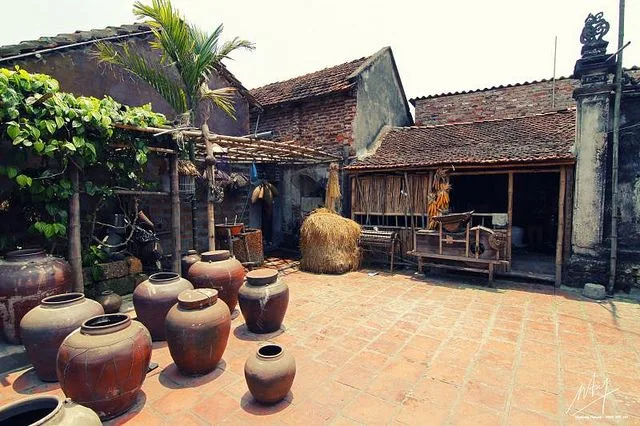
Full day (08:00 AM - 04:00 PM)Private
Private tour
From Hanoi: Bat Trang Pottery & Dong Ho Village Craft Day Tour
Route customized around your travel dates.
5.0Excellent1,508 reviews
From
US $84/pax

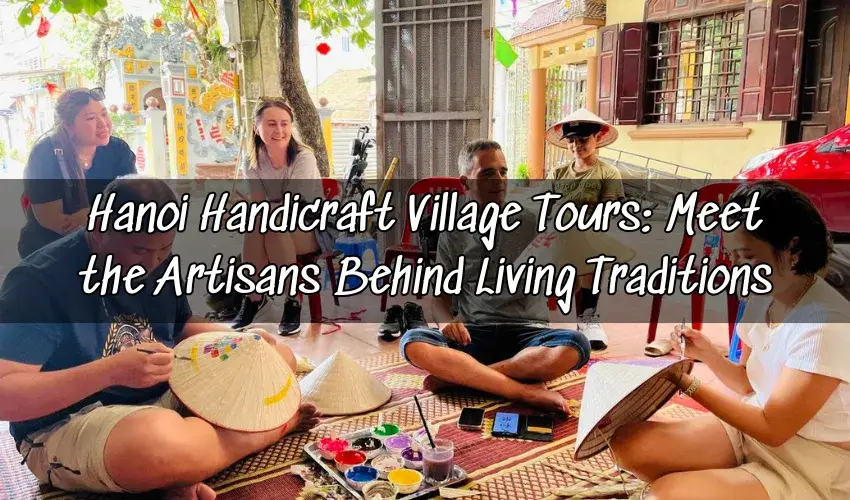
HANOI DAY TRIPS
Explore Hanoi handicraft village tours with pottery, silk, incense, artisan workshops, private guides, and flexible countryside packages.
Hanoi Handicraft Village guide
Hanoi handicraft village tours connect travelers with pottery, silk, incense, lacquer, bamboo, and other living crafts. These experiences reveal how skilled families preserve knowledge while adapting products for modern life.
A guided visit adds context beyond photographs and souvenir shopping. Guests can watch production, speak with artisans, try selected techniques, and understand each craft’s local role.
Vietnam Travelers designs shared and private routes with realistic travel times, respectful visits, and clear workshop inclusions. Packages can focus on one famous village or combine several communities in one day.
Hanoi has long been associated with specialized trades and artisan communities. Many villages developed around one craft, supported by family workshops, local materials, and regional trade networks.
The strongest tours explain more than finished products. Travelers learn how raw materials are prepared, which steps require specialist skill, and how designs change across generations.
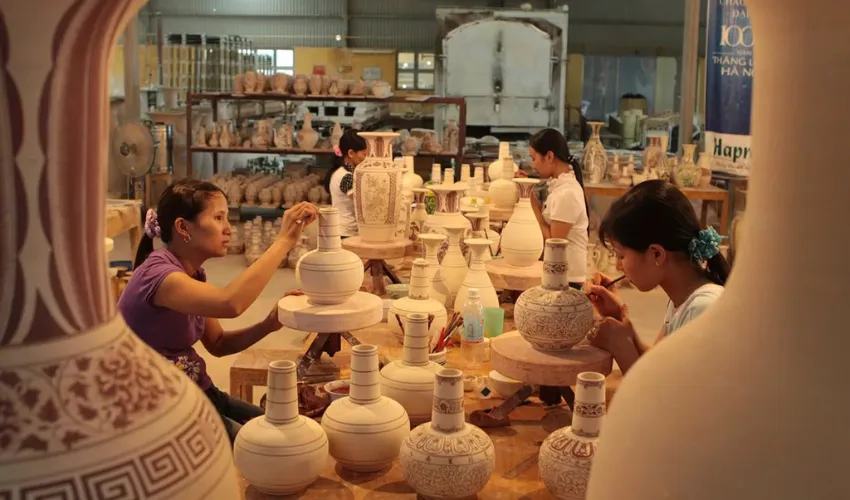
Bat Trang offers the clearest introduction to ceramic production. Visitors may observe shaping, decorating, glazing, firing, and the commercial life surrounding pottery workshops.
Van Phuc presents a different rhythm through weaving, fabric selection, pattern development, and silk retail. A good guide helps guests distinguish demonstrations from ordinary shop displays.
Quang Phu Cau is known for incense production and vivid drying scenes. Its visual appeal is strongest when visitors also understand the labor, religious use, and seasonal workflow behind each bundle.
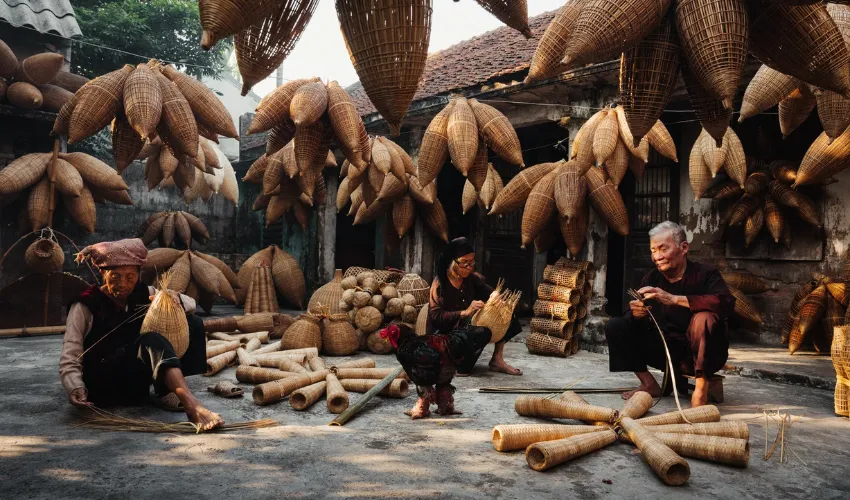
Craft tourism supports cultural learning when visits are respectful and locally connected. Responsible guests ask before photographing people, avoid blocking workspaces, and follow workshop safety instructions.
Weather, traffic, and production schedules can change the experience. Travelers should confirm which activities are guaranteed and which depend on artisan availability.
Start with our Hanoi day trips hub to compare cultural, active, and countryside experiences. It organizes options by theme, duration, and travel style.
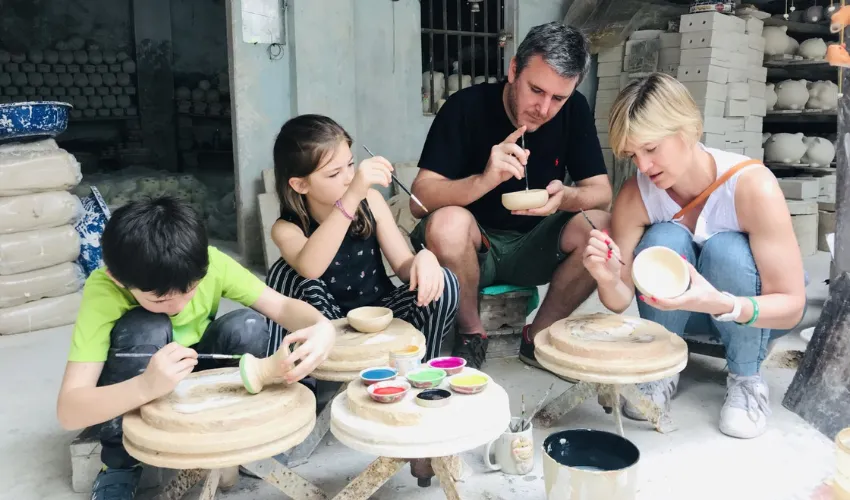
Bat Trang half-day tours suit families and short stays. They can combine pottery making, village lanes, market browsing, and selected heritage stops. Workshop formats should match each guest’s age.
Van Phuc suits textile and design interests. Strong routes explain weaving, patterns, silk quality, and modern production. Browsing time should remain unhurried and optional.
Photography routes may combine Quang Phu Cau, Chuong, or Ha Thai. Displays depend on weather, workload, and daylight. Guides should protect workspaces while helping guests frame respectful images.
Quick comparison of Hanoi handicraft village packages
Full-day multi-village routes provide greater variety but require disciplined pacing. The best plan chooses compatible locations instead of collecting distant villages without enough time. Compare our Hanoi full-day trips for other longer routes.
Private Hanoi handicraft village tours reserve the guide and vehicle for one party. This format supports longer workshops, photography stops, family breaks, and focused conversations with artisans.
Shared tours may offer lower prices and a social atmosphere. However, guests usually receive less control over timing, shopping stops, workshop duration, and route changes.
Clear Hanoi handicraft village packages state transport, entrance fees, workshops, meals, and guide services. They should also explain which handmade item guests can keep after the activity. Review our three traditional handicraft villages tour for a bookable itinerary.
For village details, read our Bat Trang pottery guide, Quang Phu Cau incense guide, and Van Phuc silk guide.
A meaningful route follows the craft process rather than a souvenir checklist. It connects materials, techniques, working spaces, local history, and current market challenges.
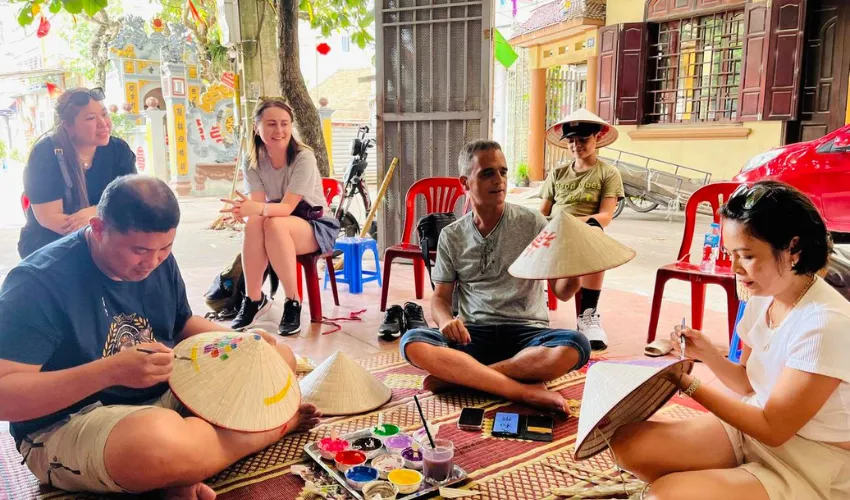
Pottery experiences may include shaping clay, painting a prepared item, or observing kiln work. The operator should explain what guests will actually do before arrival.
Textile visits need time for weaving demonstrations and fabric questions. Travelers should understand the difference between handmade silk, blended fabric, printed patterns, and machine-produced goods.
Incense and lacquer routes depend more heavily on working conditions. Rain can change drying displays, while production areas may contain dust, dyes, strong scents, or wet surfaces.
Confirm the exact villages and expected transfer time between them.
Ask which workshops, demonstrations, and artisan meetings are guaranteed.
Check whether hands-on activities suit children or travelers with limited mobility.
Review entrance fees, workshop costs, meals, drinks, and private transport.
Confirm guide language, group size, hotel pickup area, and return time.
Ask how rain, heat, holidays, or production changes affect the itinerary.
Share photography goals, shopping interests, allergies, and mobility needs early.
Respectful visits protect both guests and local livelihoods. Travelers should request permission before portraits and avoid touching unfinished products without guidance.
Hands-on activities work best when instructors can supervise each participant. Large groups may need staggered sessions, extra assistants, or shorter demonstrations.
Travelers seeking deeper participation can compare Hanoi workshop and class tours. Countryside-focused guests can also review Hanoi eco tours.
The cheapest package may include only transport and retail stops. Stronger tours invest in guiding, workshop access, realistic timing, and clear communication before departure.
The best Hanoi handicraft village tours identify the craft focus and expected learning. They also separate guaranteed activities from optional shopping or weather-dependent scenes.
A knowledgeable guide should explain materials, production stages, village history, and modern business pressures. Commentary must remain clear, accurate, and connected to what guests can see.
Professional operators manage practical details before the tour begins. They confirm pickup, vehicle type, workshop arrangements, dietary needs, and possible itinerary adjustments.
The total duration, route order, and time spent inside each village.
The names of confirmed workshops and included hands-on activities.
Private or shared format and the maximum group size.
Vehicle type, air conditioning, seat arrangements, and child seat availability.
Entrance fees, materials, lunch, drinks, and finished craft collection terms.
Cancellation, weather, holiday, production, and route-change policies.
Accessibility limits involving steps, narrow lanes, workshop floors, or long standing.
Reviews are useful when they describe specific workshops and guide quality. Look for comments about pacing, authenticity, communication, and whether promised activities happened.
Generic praise reveals less than detailed feedback from similar travelers. Families, photographers, and craft enthusiasts may judge the same itinerary very differently.
The category page should compare package styles and village combinations. Individual tour pages should own exact itineraries, current prices, availability, and booking conditions.
This separation protects the broad commercial keyword from cannibalization. It also guides visitors from comparison content toward a suitable bookable tour.
Private Hanoi handicraft village tours give couples, families, and small groups greater control. Guests can request fewer villages, longer workshops, slower photography, or more time with one artisan community.
Morning departures often match active production and cooler conditions. Afternoon plans may suit Bat Trang, while longer southern routes usually need an early start.
Travelers should avoid assuming every workshop operates daily. Family events, holidays, seasonal demand, and production cycles may change access without much notice. A flexible guide can replace closed stops with another relevant workshop or village feature.
Wear closed shoes with reliable grip inside working areas.
Carry water, sunscreen, insect protection, and a compact rain layer.
Use a secure bag and protect cameras from dust or wet surfaces.
Bring small cash for local purchases, but avoid pressured shopping.
Choose modest clothing for communal houses, temples, and family spaces.
Share allergies, breathing concerns, and mobility limits before confirmation.
Some workshops use heat, sharp tools, dyes, dust, or strong fragrances. Guests must follow instructions and supervise children closely.
Buying directly can support artisan households, but quality varies. Ask about materials, production origin, care instructions, and safe packaging for transport. Custom orders may require extra production time and later delivery arrangements.
Photography should never interrupt work or turn residents into props. A local guide can request consent and identify appropriate viewing areas.
Active travelers can combine village culture with Hanoi bike tours. Guests wanting vehicle comfort can compare Hanoi Jeep tours.
A craft village day also fits within broader Vietnam private tours. Your travel designer can coordinate hotels, transfers, guides, and onward travel across northern Vietnam.
1. Which village is best for a first handicraft tour from Hanoi?
Bat Trang suits most first-time visitors because it offers pottery workshops, heritage lanes, and easy access. Other villages suit more specific interests.
2. How long should a Hanoi handicraft village tour last?
A single nearby village can fit a half-day. Two or three distant villages usually need a full day and private transport.
3. Are private Hanoi handicraft village tours suitable for families?
Yes, when the route includes safe workshops, realistic travel times, and age-appropriate activities. Parents should share children’s ages before booking.
4. Do Hanoi handicraft village packages include workshops?
Some packages include materials and instruction, while others offer demonstrations only. Confirm the exact activity and take-home item before payment.
5. Can weather change an incense or craft village itinerary?
Yes. Rain, heat, and production schedules can affect drying displays, workshops, and photography. A reliable operator explains alternative plans clearly.
References
Viet Nam National Authority of Tourism - Explore traditional craft villages in Hanoi
Hanoi Portal - Bat Trang and Van Phuc join the World Network of Creative Craft Cities
Vietnam Tourism - Full-day trip to Bat Trang Pottery Village
Hanoi Culture and Sport Facilities - Hanoi, the land of hundreds of occupations