
HANOI DAY TRIPS
Hanoi Cooking Class
Join a Hanoi cooking class with a local market visit, hands-on recipes, private options, dietary planning, and clear package inclusions.
Hanoi Cooking Class guide
Explore Hanoi Cooking Class
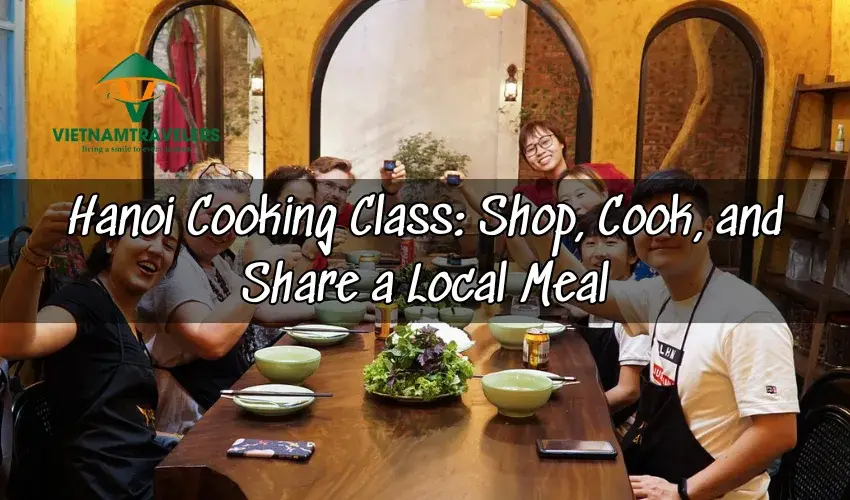
Hanoi Cooking Class: Shop, Cook, and Share a Local Meal
A Hanoi cooking class turns a local meal into a practical cultural lesson. You shop for ingredients, learn core techniques, prepare several dishes, and share the finished menu.
The experience can reveal why northern flavors often feel clean, balanced, and ingredient-led. A skilled host also explains family habits, seasonal choices, and everyday dining etiquette.
Vietnam Travelers compares market visits, home kitchens, studio classes, and private formats. Clear packages help guests choose the right pace without confusing a cooking lesson with a simple food tour.
1. What you learn in a Hanoi cooking class
A strong class teaches more than a printed recipe. It shows how local cooks judge freshness, prepare aromatics, balance dipping sauces, and control heat.
Good teaching also explains texture and timing. Guests learn when ingredients should stay crisp, soften slowly, or rest before serving.
Northern Vietnamese cooking often relies on clean broths, fresh herbs, fish sauce, rice products, and careful seasoning. Instructors should explain each ingredient before the group starts cooking.
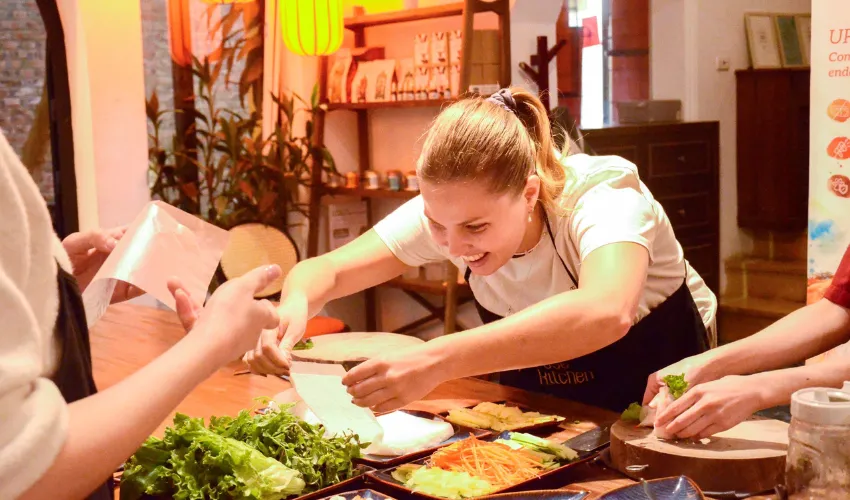
Guests may prepare spring rolls, bun cha, banana flower salad, pho elements, or a seasonal home dish. Menus vary because kitchens have different equipment, class lengths, and teaching strengths.
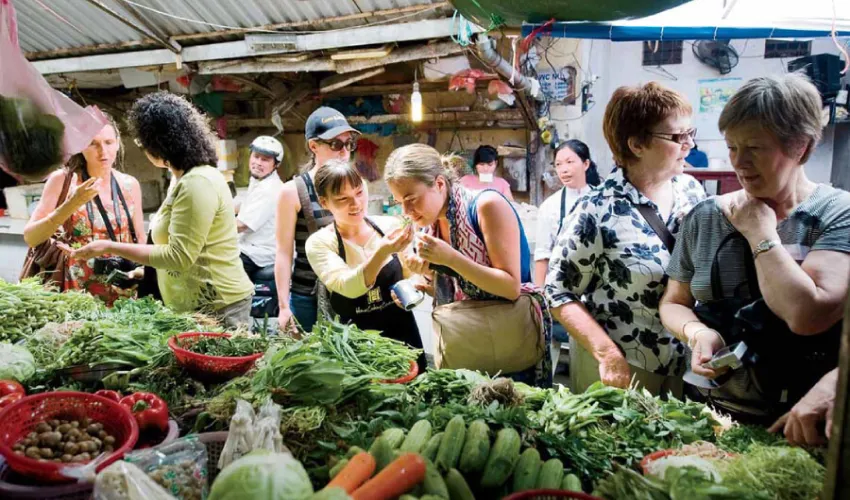
A market visit adds context when it supports the menu. Guests can compare herbs, noodles, tofu, mushrooms, spices, sauces, and fresh produce with guidance from the host.
However, a market should not become a rushed photo stop. The guide should identify ingredients, discuss substitutions, and explain how families shop for daily meals.
Travelers who prefer tasting over cooking can compare Hanoi street food tours. Those seeking broader creative activities can explore Hanoi workshop and class tours.
Our Hanoi food tour guide also explains local dishes and food-tour preparation. It supports the class page without competing for booking intent.
2. Compare Hanoi cooking class packages
Hanoi cooking class packages differ by venue, menu depth, group size, and included transport. A short studio lesson feels very different from a hosted family meal.
Market-to-table classes suit first-time visitors who want ingredient context. Home-style sessions offer closer conversation, while professional kitchens provide more workstations and structured demonstrations.
Location also shapes the day. Central venues reduce transfer time, while suburban homes may offer gardens, quieter streets, and a stronger household setting.
A private Hanoi cooking class gives one party greater control over recipes and pace. It can also support dietary planning, children, celebrations, or guests who need more breaks.
Shared classes usually cost less and create a social atmosphere. Yet participants may have limited menu choice, fixed timing, and less individual attention from the instructor.
Before booking, confirm whether each guest prepares every dish. Some classes divide tasks, while others use demonstrations for complex steps.
Package descriptions should state market transport, ingredients, drinks, recipes, aprons, meals, and hotel transfers. They should also identify optional purchases and extra charges.
The category page should compare these formats. Individual product pages should own exact menus, schedules, availability, prices, and booking terms.
3. From local market to shared meal
A well-paced class follows a clear sequence. The host introduces the menu, checks dietary needs, and assigns safe tasks before knives or heat are used.
Market visits work best early, when produce is varied and trading remains active. The guide should keep the group together and avoid blocking narrow stalls.
Back in the kitchen, ingredients should already have a logical place. Organized workstations reduce waiting and help travelers understand the order behind each dish.
The instructor should explain unfamiliar tools before cooking begins. Clear task changes prevent confusion when several dishes use different heat levels or preparation methods.
A short menu briefing and allergy check before shopping.
A guided market visit linked directly to the chosen dishes.
Ingredient preparation with clear knife and hygiene guidance.
Hands-on cooking with demonstrations at important stages.
A shared meal with serving notes and cultural context.
Recipes or follow-up notes for cooking again at home.
Guests should receive direct guidance during preparation. Demonstrations are helpful, but hands-on practice creates stronger memories and better learning.
Food safety matters throughout the lesson. Clean hands, separate raw ingredients, correct temperatures, safe water, and tidy surfaces should be visible standards.
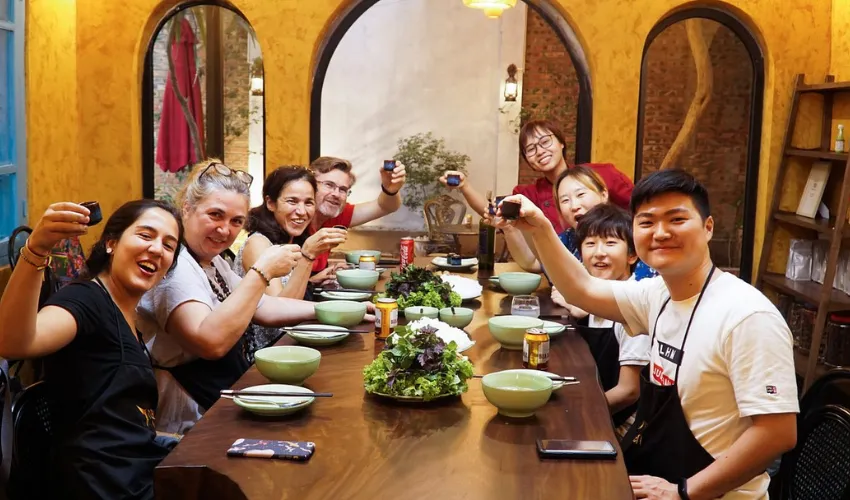
The final meal is part of the teaching. Hosts can explain serving order, shared dishes, chopstick etiquette, condiments, and how families adjust flavors at the table.
Recipe notes should use practical measures and realistic substitutes. Travelers need enough detail to repeat the dishes after returning home.
Guests who enjoy exploring ingredients on foot can add Hanoi walking tours. The combination works well when both activities remain focused and unhurried.
4. How to choose the best Hanoi cooking class
The best Hanoi cooking class matches your interests, not a generic ranking. A serious cook may value technique, while a family may prefer simple tasks and a relaxed meal.
Start by reviewing the menu. It should represent local cooking and fit the available time. Four complicated dishes can feel rushed in a short session.
Class size affects the experience. Small groups usually receive more feedback, clearer demonstrations, and better access to the instructor.
Instructor skill matters as much as personality. Strong teachers notice mistakes early, explain the reason, and offer practical corrections without taking over.
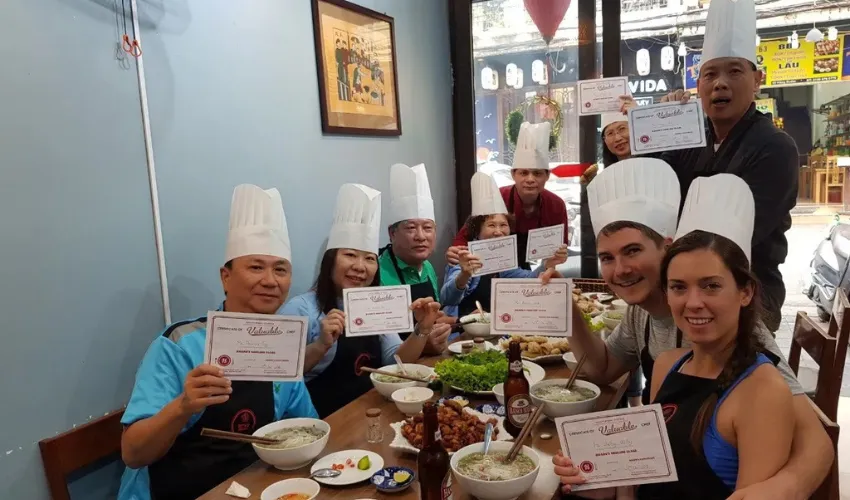
Venue type, class size, instructor language, and total duration.
Exact dishes and whether every guest cooks each recipe.
Market visit length and transport between the market and kitchen.
Ingredients, drinks, recipes, aprons, meals, and hotel transfers.
Allergy procedures, vegetarian options, and cross-contact limits.
Cancellation, late arrival, weather, and minimum-booking policies.
Professional hosts ask about allergies before the class. They also explain whether the kitchen can prevent cross-contact for severe medical needs.
Vegetarian menus should feel complete rather than improvised. Guests should confirm fish sauce, broth, oyster sauce, eggs, dairy, and shared cooking surfaces.
Reviews are most useful when they mention teaching quality, cleanliness, menu accuracy, pacing, and market value. Generic praise reveals less than specific examples.
Photos can also show workstation space and group size. Still, current inclusions matter more than old images or broad claims about authenticity.
A reliable operator communicates clearly before arrival. Pickup instructions, start time, cancellation terms, and dietary confirmations should not remain vague.
The page should use natural language rather than repeating “best” in every section. This keeps the content helpful while preserving the commercial keyword target.
5. Plan a private class around your needs
Private Hanoi cooking class sessions suit couples, families, friends, and small incentive groups. The host can adjust the teaching pace and choose recipes around shared interests.
Families should ask about minimum ages, stools, knives, hot surfaces, and child-sized tasks. Younger guests often enjoy rolling, mixing, decorating, and assembling dishes.
Travelers with limited mobility need clear access information. Traditional homes may include stairs, low seating, narrow kitchens, or uneven market paths.
Dietary planning should happen before menu confirmation. Share allergies, vegetarian needs, religious restrictions, spice tolerance, and disliked ingredients in one clear message.
Guests may also ask about photography and recipe sharing. A thoughtful host allows useful notes without letting phones interrupt demonstrations or kitchen safety.
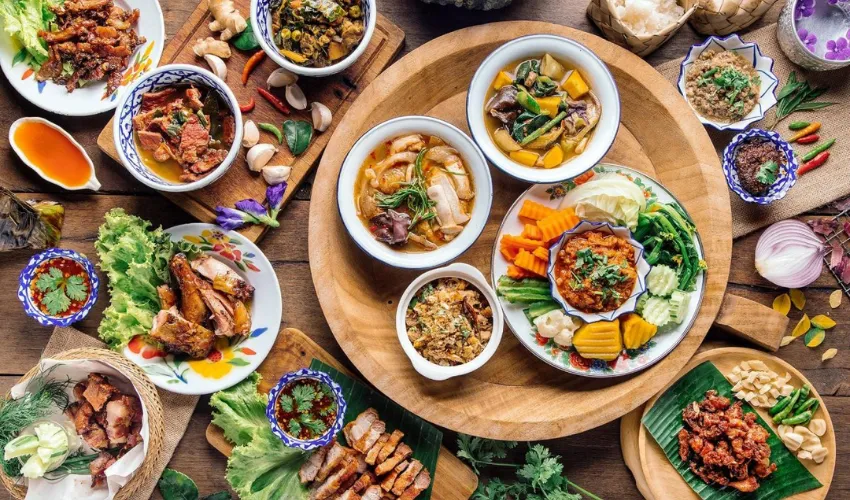
Send all dietary details before the operator confirms the menu.
Wear closed shoes and comfortable clothes near heat and water.
Tie back long hair and avoid loose sleeves near burners.
Tell the host about mobility limits or reduced standing time.
Ask before bringing young children into a shared class.
Arrive hungry, but eat lightly if the class starts late.
Morning classes suit market activity and leave the afternoon open. Evening classes can feel more social, but some markets offer fewer demonstrations later.
Seasonal changes can improve the menu. Fresh herbs, vegetables, fruits, and family dishes vary across Hanoi’s hot, cool, rainy, and dry periods.
Cooking also connects naturally with local craft and rural culture. Compare Hanoi handicraft village tours or Hanoi eco tours for a broader day outside the central districts.
Browse Hanoi day trips when building a balanced city stay. Travelers planning several regions can include the class within Vietnam private tours.
A well-designed private package protects the learning time. It avoids too many unrelated stops and leaves space for questions, cooking, and a relaxed shared meal.
6. Frequently asked questions
1. How long does a Hanoi cooking class take?
Most classes last three to five hours. Market visits and longer menus usually require more time.
2. Are Hanoi cooking classes suitable for beginners?
Yes. Good instructors demonstrate each step and assign tasks according to confidence and experience.
3. Can I book a vegetarian cooking class?
Many hosts offer vegetarian menus. Confirm sauces, broths, eggs, and shared surfaces before paying.
4. Is a private class better for families?
Private classes allow flexible pacing and simpler tasks. Parents should still confirm age limits and kitchen safety.
5. What should I bring to the class?
Bring comfortable shoes, a small water bottle, and written dietary details. The operator should provide ingredients and equipment.
References