
HANOI DAY TRIPS
Hanoi Vespa Tour
Glide through Hanoi on an iconic Italian scooter — sunset light reflects off golden temples as your guide navigates the most photogenic corners of the city.
Hanoi Vespa Tour guide
Explore Hanoi Vespa Tour
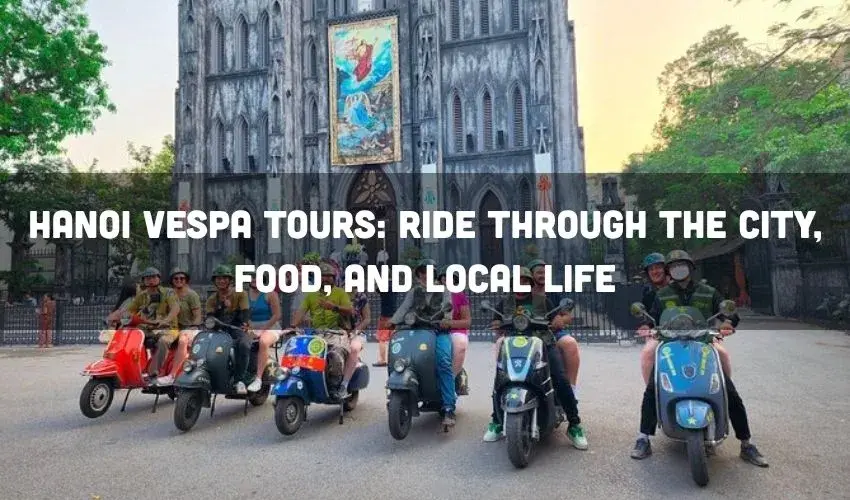
Hanoi Vespa Tours: Ride Through the City, Food, and Local Life
Hanoi Vespa Tours combine classic style with local exploration. Guests usually ride behind experienced drivers while discovering several city districts.
The journey can include historic landmarks, hidden lanes, street food, lakes, markets, and residential neighborhoods.
Some routes leave the city for farms, villages, and ancient sites. Others focus on Hanoi after dark.
A Vespa covers more ground than a walking tour. It also reaches places that large vehicles cannot enter.
The best route matches your interests, comfort, schedule, and dietary needs. Safety standards should remain clear.
Quick summary: Hanoi Vespa Tours offer city, food, night, and countryside routes. Most guests travel as passengers with local drivers.
1. Why explore Hanoi on a vintage Vespa?
Hanoi changes quickly between major roads and quiet lanes. A compact scooter handles these transitions efficiently.
The elevated passenger seat gives a wide street view. You can watch markets, cafes, homes, and workshops pass nearby.
Frequent stops keep the journey personal. Guides can explain architecture, customs, food, and daily routines.
Vintage scooters add visual character. They also create memorable photographs beside landmarks and local streets.
Guests do not need riding experience on passenger tours. The local driver controls the vehicle and route.
Cover several neighborhoods within a half day.
Reach narrow lanes and smaller local roads.
Combine transport, sightseeing, and storytelling.
Stop easily for food and photographs.
Experience Hanoi from a local street perspective.
Explore more: Hanoi Day Trips | Hanoi Scooter Tours Guide
2. Choose a city highlights Vespa tour
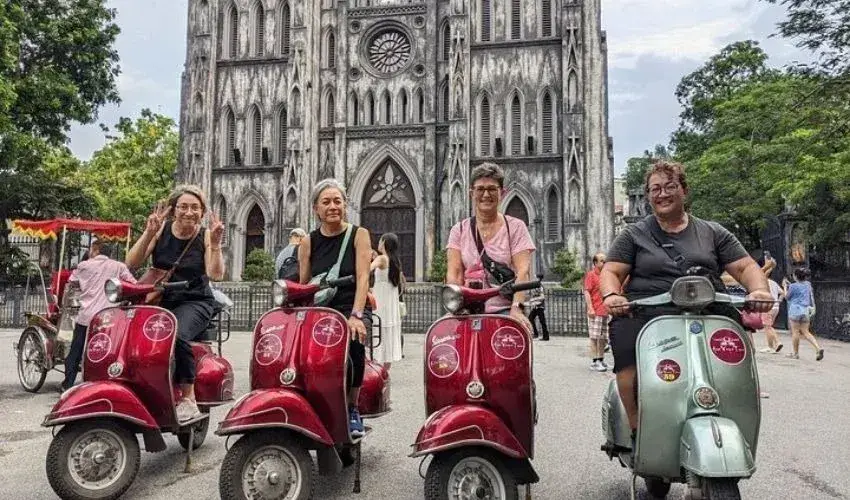
A city-focused route introduces Hanoi’s main contrasts. Ancient streets sit beside colonial buildings and modern neighborhoods.
Popular routes may pass the Old Quarter, French Quarter, West Lake, and Long Bien Bridge.
Some itineraries stop near historic monuments or temples. Access can depend on opening hours and local conditions.
Backstreet sections often become the most memorable part. These roads reveal family homes, markets, and small community spaces.
A half-day format suits first-time visitors. It can provide a useful overview before deeper exploration.
Related experiences: Hanoi Motorbike Tours | Hanoi Jeep Tours | Hanoi Cyclo Tours
3. Discover hidden neighborhoods and backstreets
Main attractions tell only part of Hanoi’s story. Residential districts show how the city works each day.
A local guide can lead through quiet alleys and community lanes. These areas often remain outside standard bus routes.
You may pass flower markets, family workshops, railway areas, and lakeside roads. Actual stops vary by itinerary.
The guide should explain local context without interrupting residents. Respectful observation creates better community encounters.
Photography works best during planned stops. Avoid taking pictures while the Vespa is moving.
Hidden Hanoi tours suit repeat visitors and photographers. They also suit travelers who prefer daily life over formal monuments.
Explore slowly: Hanoi Walking Tours | Hanoi Backstreet Tours
4. Add street food and evening atmosphere
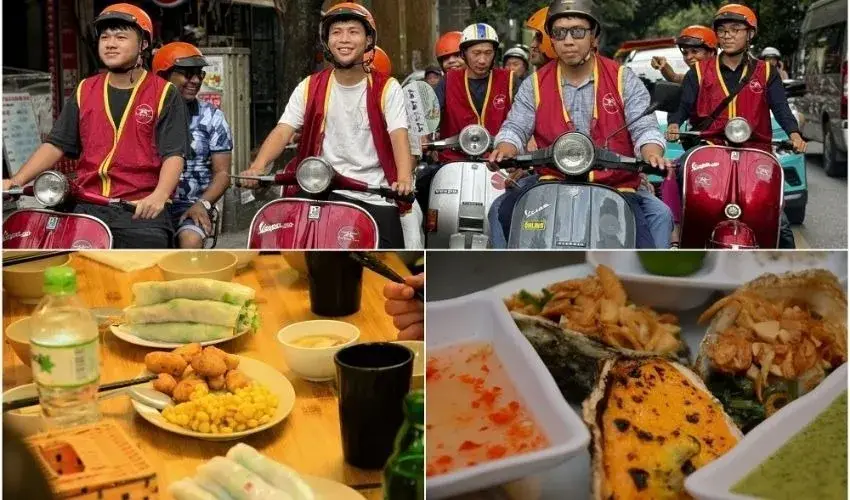
Food stops create time to meet local vendors and understand Hanoi’s everyday dining culture.
Many Hanoi Vespa Tours combine sightseeing with local food. The vehicle connects distant vendors without long walks.
Evening departures reveal brighter streets and active dining areas. Cooler temperatures can improve comfort during warmer months.
Tastings may include noodles, grilled dishes, snacks, coffee, or dessert. Menus change with vendors and dietary needs.
A good route balances eating with cultural stops. Continuous food stops can feel rushed and repetitive.
Tell the operator about allergies before booking. Sauces and broths can contain hidden ingredients.
Food-focused reading: Hanoi Street Food Tours | Vespa Food Tour in Hanoi | Hanoi Vespa Night Food Tour
5. Escape into Hanoi’s countryside
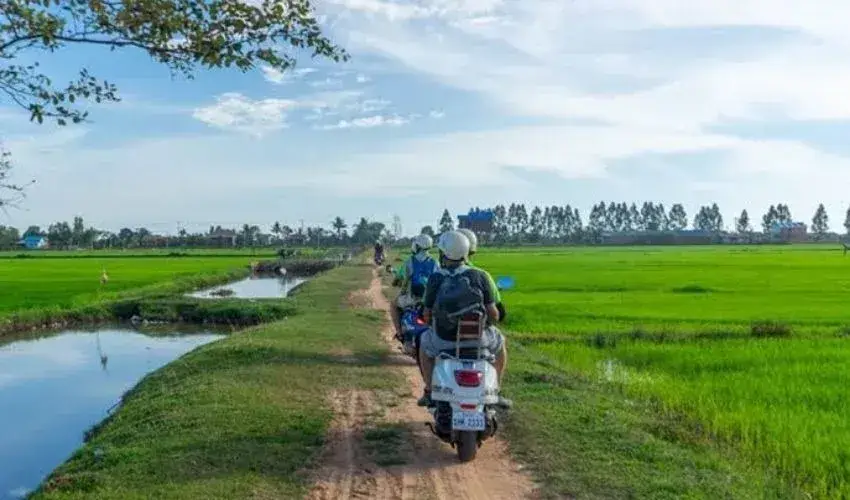
Countryside routes replace busy streets with village lanes, farms, fields, and open landscapes.
A rural Vespa route offers a calmer contrast to central Hanoi. It usually needs more time than a city loop.
Routes may cross the Red River and continue toward farming communities. Some tours include Co Loa or craft villages.
Riders can observe seasonal agriculture and village architecture. Local stops should remain respectful and well planned.
Countryside roads can include uneven surfaces. Guests should discuss back, neck, or mobility concerns before booking.
This experience suits travelers seeking scenery and local life. It also works well after a busy city day.
Related countryside options: Hanoi Handicraft Village Tours | Hanoi Eco Tours | Hanoi Bike Tours
6. Safety standards and passenger comfort
Traffic can look intense to first-time visitors. Professional drivers understand local movement and choose suitable routes.
Every guest should receive a well-fitting helmet. The guide should also provide a clear safety briefing.
Passengers need stable foot placement and secure handholds. Loose bags should remain closed and close to the body.
Avoid using a phone during movement. Ask the driver to stop before taking photographs or checking directions.
Reliable operators maintain brakes, tires, lights, mirrors, and passenger seats. Guests can inspect the scooter before departure.
Heavy rain or storms may require changes. The operator should explain rescheduling and cancellation procedures.
Review travel insurance coverage for passenger motorbike activities. Policy conditions vary between insurers.
Safety guide: Is a Hanoi Vespa Tour Safe?
7. What to wear and bring
Wear comfortable clothing that stays close to the body. Loose scarves can become unsafe near moving parts.
Closed shoes provide better stability during mounting and stops. Avoid slippery soles and unstable footwear.
Long trousers offer useful protection from wind, sun, and road dust. A light jacket helps during cool evenings.
Bring sunscreen and sunglasses for daytime routes. Carry a compact rain layer during unsettled weather.
Use a crossbody bag or small backpack. Keep cameras secured with a reliable strap.
Closed shoes with secure soles
Comfortable trousers or fitted clothing
Light jacket or rain layer
Sunscreen and sunglasses
Small secure bag
Medication and dietary information
Preparation guide: What to Wear on a Vespa Tour
8. Compare Hanoi Vespa tour styles
Durations and inclusions vary by operator. Confirm transport, guide service, food, drinks, and pickup before payment.
9. How to choose and book the right tour
Start with your main interest. Choose city history, local food, photography, nightlife, or countryside life.
Check whether guests ride as passengers or drive independently. Passenger service usually suits most international visitors.
Review route length, stop quality, and riding time. Long lists of attractions can create a rushed experience.
Confirm helmet quality, driver experience, insurance, and weather procedures. Clear answers show professional preparation.
Ask about hotel pickup zones and final drop-off. Evening travelers should know where the tour ends.
Hanoi Vespa Tours should balance excitement with comfort. A thoughtful route leaves enough time for people and places.
Current tour collection: Hanoi Vespa Tour Archive
10. FAQ
1. Do I need to drive the Vespa?
No. Most sightseeing tours carry guests behind experienced local drivers. Confirm the format before booking.
2. Are Vespa tours suitable for first-time visitors?
Yes. City routes provide a useful overview of landmarks, neighborhoods, and local life.
3. How long does a typical tour last?
Many tours last three to five hours. Countryside routes may require a longer schedule.
4. What happens when it rains?
Light rain may only require rain gear. Heavy weather can cause route changes or rescheduling.
5. Can children join a Vespa tour?
Policies vary by operator and route. Share each child’s age and comfort before booking.
6. Can dietary needs be supported?
Yes, with advance notice. Private food tours provide the greatest flexibility for menu changes.